


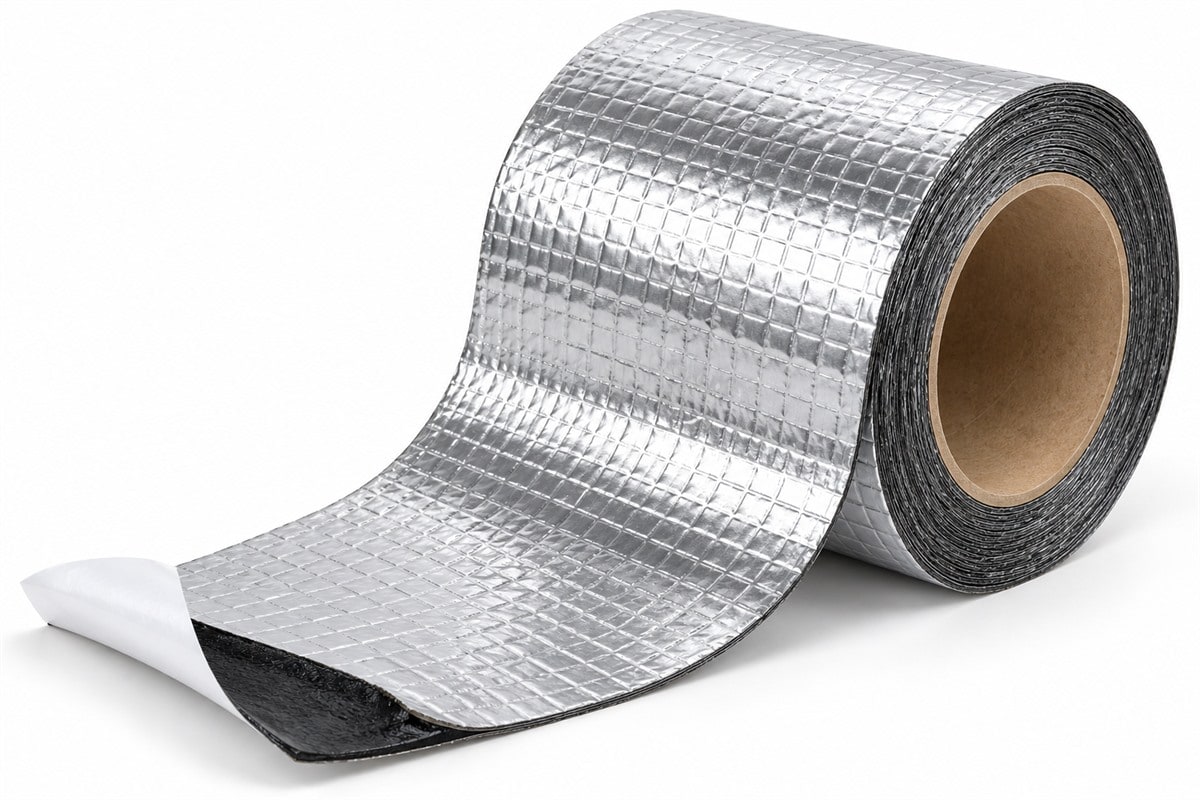
Overview
Butyl-based tapes can serve as a seal within a compressed overlap or as part of a faced sealing construction. Those formats are not interchangeable. The required shape, thickness and facing depend on where the tape sits in the joint and how the assembly is closed.
A sealing tape is not a structural fastener or a universal roof repair system. Compatibility must be checked against coatings, membranes and adjacent sealants. Existing damage, standing water and joint movement require an assessment of the roof or building assembly, not simply the addition of a wider strip.
Typical Applications
Metal roof overlaps
Evaluate a suitable butyl strip within specified lap joints. Follow the roof system's requirements for tape placement, compression and mechanical fastening rather than improvising a closure detail.
Panel and flashing joints
Consider sealing constructions for compatible panel overlaps or flashing interfaces. Describe whether the tape is enclosed between materials or remains exposed after installation.
Construction maintenance
Assess appropriate joints for a specified sealing repair. Identify the cause of leakage and the condition of the receiving surface before choosing tape as part of the solution.
Selection Guide
Describe the joint profile
Provide gap dimensions, overlap width and expected compression. A section drawing helps distinguish a bedding strip from a faced surface-applied tape and avoids a mismatched proposal.
Check material compatibility
List metals, paints, membranes and existing sealants that may contact the tape. Obtain compatibility guidance for the proposed construction and test representative materials where needed.
Review service exposure
State sunlight, water contact, temperature variation and joint movement. Confirm whether the selected tape needs protection or a facing; do not assume every butyl construction is suitable exposed.
Purchase specifications and acceptance
| Confirm | Include in your enquiry |
|---|---|
| Dimensions and tolerances | Width (mm), roll length (m), thickness (µm or mm), core size and tolerances. State whether thickness means the backing or the complete tape, and whether the liner is included. |
| Tape construction | Required backing, adhesive type, colour and liner, where applicable. Include the materials to be bonded and a sample or drawing when available. |
| Performance and acceptance | Required properties and acceptance limits, with the test method, substrate, application conditions, dwell time and service conditions. Compare results only under equivalent test conditions. |
| Packing and delivery | Order quantity, rolls per carton, labelling, destination and required documents. Confirm the agreed specification, sample and delivery terms before ordering. |
Dimensions and performance depend on the selected grade. Confirm the specification and acceptance criteria in the quotation, sample approval and order documents.
Frequently Asked Questions
Can butyl tape replace roof fasteners?
No. A sealing strip addresses the joint seal, not the structural fixing of roof panels. Use the fastening and joint design specified for the roof system, with tape selected for that assembly.
Is every butyl tape suitable for exposed roofing repairs?
No. Some formats are intended to sit inside a compressed joint. Surface-exposed repairs can require a different facing and construction. Describe the installed position and exposure before choosing a product.
How should I specify butyl tape thickness?
Start with the joint gap, surface profile and intended compression, not an arbitrary thickness. Share a drawing or sample detail so the proposed strip can be reviewed against the assembled joint.
Request a Quote
Send the roofing or panel joint detail and any project specification. Contact Maiwenluo to discuss your application, specifications and sample requirements.
- Joint drawing, contact materials and surface coatings
- Gap, overlap, compression and exposed or enclosed position
- Tape profile, dimensions, quantity, packing and destination
Specifications, availability and commercial terms are confirmed for each order.