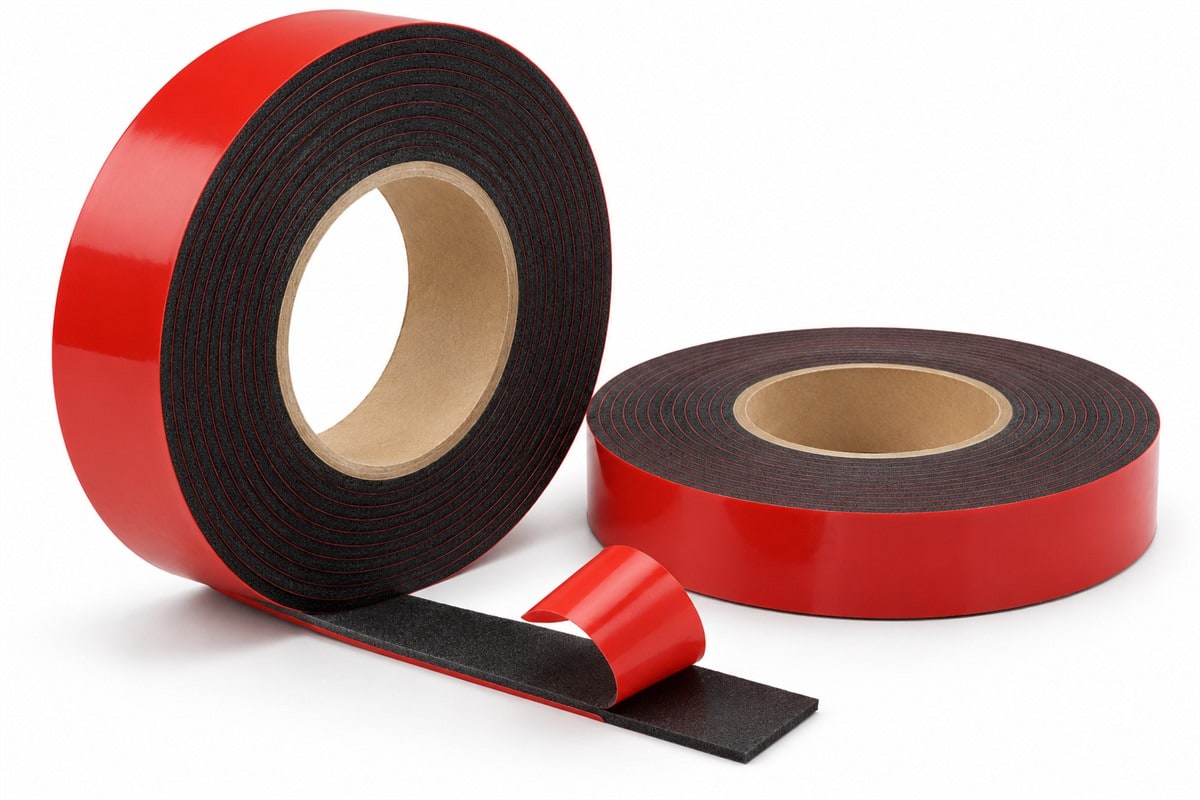


High-Temperature Tape
Review this category for masking with defined heat exposure. Match the precise construction to the full process, including chemicals and removal, before approving it.
Choose tape for electronics assembly and masking by process exposure, surface compatibility, and component geometry. Define what must remain covered, what must stay fixed, and how each result will be inspected.

Electronics assembly may require a removable mask over a contact area during coating, or an adhesive to hold a part inside an enclosure. Each task has its own removal, cleanliness, and dimensional requirements. Describe the operation before choosing a tape, and identify nearby contacts, vents, and surfaces that must remain clear.
Maiwenluo offers industrial tapes and helps you discuss product specifications and application requirements. The categories below provide starting points for sample evaluation. They do not establish electrical insulation, electrostatic discharge protection, thermal transfer, or shielding performance. Where a design requires one of those functions, request documented properties for the exact grade and qualification within the finished assembly.
Before a coating or other specified process, identify the connector areas or contact pads that must remain exposed afterward. Assess a suitable process-masking grade for placement accuracy, edge sealing, and removal access. Inspect for residue and unwanted coating ingress without assuming every high-temperature tape suits every board process.
For a small component carrier, label plate, or internal film, compare double-sided tape on both actual mating surfaces. Keep the adhesive footprint clear of contacts and openings. Evaluate placement tolerance, handling strength, and service retention, and decide whether future access requires a planned removal method.
Where a nonstructural part meets a housing with slight surface variation, consider PE foam double-sided tape within the available space. Check compressed thickness and assembly fit. Verify that the joint does not obstruct ventilation or interfere with fasteners; a foam carrier is not proof of heat-dissipation performance.
Build the sample trial around the production sequence. Include cleaning, tape application, any thermal or chemical exposure, dwell, and removal or final assembly. Specify inspection points and allowable residue, movement, and dimensional variation so purchasing and engineering assess the same result.
| Task | Contact materials | Candidate tape | Conditions to confirm |
|---|---|---|---|
| Temporary process masking | Specified board finish, contact areas, and adjacent materials | High-temperature tape qualified for the process | Exposure profile, chemical compatibility, edge ingress, residue, removal access, and static-control requirements |
| Component or film fixing | Actual carrier, film, metal, or plastic surfaces | Double-sided tape with a suitable carrier and adhesive | Footprint accuracy, bond-line thickness, service retention, cleanliness, and rework needs |
| Nonstructural enclosure mounting | Specified housing and mating part | PE foam double-sided tape | Compression, fit, surface contact, thermal environment, ventilation clearance, and conditioned retention |
These categories are starting points, not a performance guarantee. Maiwenluo offers industrial tapes and helps you discuss product specifications and application requirements. Confirm the exact specification and validate samples in your application before ordering.
Review this category for masking with defined heat exposure. Match the precise construction to the full process, including chemicals and removal, before approving it.
Use this category to compare thin attachment options for parts or films. Select for the two surfaces, placement method, and required service or rework behavior.
Evaluate a compliant foam construction for nonstructural enclosure attachment where the design allows its thickness. Validate compression and retention within the assembled housing.
No. Temperature resistance does not establish dielectric performance, flame behavior, or suitability for an insulation system. Request the exact grade's relevant documentation and have the responsible engineer qualify it for the intended electrical design.
Do not assume so. Coating, soldering, plating, and cleaning expose tape to different conditions. Describe the actual operation and assess the adhesive and backing together. Include removal, residue inspection, and any electrostatic discharge controls in the trial.
Use production surfaces and representative parts. Check alignment immediately after placement and retention after the specified environmental conditioning. Inspect nearby contacts and openings, then evaluate disassembly if servicing is required. A successful bench attachment alone does not establish long-term assembly performance.
Share your assembly drawing or masking outline with Maiwenluo to discuss samples for the actual operation. Include the following quotation details: